Product details
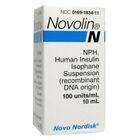
Novolin N (insulin isophane human)—also known as NPH (neutral protamine Hagedorn) insulin—is an intermediate-acting insulin containing 100 units/mL (U-100) and is used for the initial treatment and long-term management of diabetes mellitus in dogs.
*Please note: This product is an injectable suspension supplied in a multi-dose vial. Needles and U-100 syringes are required for administration (sold separately).
-
Used to help control your pet’s blood glucose levels and reduce the clinical signs of diabetes.
-
Use with U-100 syringes only—please consult your veterinarian to determine the appropriate needle and syringe size for your pet.
-
Do not mix with other insulins or shake the vial prior to use.
-
May be prescribed for other animal species; please consult your veterinarian.
-
While this drug does not have an FDA-approved indication for all animal uses, it is commonly accepted for veterinarians to prescribe this medication for use in animals.
Novolin N requires refrigeration; all orders must be shipped overnight at an additional charge and are not eligible for free shipping. Orders only ship Monday-Thursday and will not be processed the day before a major holiday.
Product sourced directly from the manufacturer or their approved distributor. Guaranteed genuine product backed by the manufacturer.
For
Dogs
Active ingredient(s)
NPH insulin
Inactive ingredients
Each milliliter of Novolin N contains:
dibasic sodium phosphate (1.9 mg),
glycerin (16 mg),
metacresol (1.5 mg),
phenol (0.65 mg),
protamine sulfate (approximately 0.35 mg),
zinc (33.5 mcg), and
Water for Injection.
Hydrochloric acid 2N and sodium hydroxide 2N may be added to adjust the pH. The pH is 7.1 to 7.5.
Brand name
Novolin N
Drug class
Intermediate-acting insulin, Injectable
Manufacturer
Novo Nordisk
Product strength & size
This sterile injectable suspension contains 100 units of NPH insulin per 1 mL (U-100) of suspension and is supplied in a 10 mL multi-dose vial. Please ensure the selected product is appropriate for your pet, as recommended by your veterinarian.
For current availability, please refer to the product selection above.
Usage
Novolin N Insulin should be administered subcutaneously (injected under the skin) as directed by your veterinarian. Please consult your veterinarian before making any changes or discontinuing the prescribed dosing schedule.
Only compatible (U-100) syringes should be used with this product; use of a syringe other than a U-100 syringe can result in incorrect dosing.
Injectable medications require needles, syringes, and a designated sharps disposal container. These are not included with the medication and must be purchased separately.
Please consult your veterinarian for guidance regarding appropriate needle and syringe sizes for your pet.
For general injectable use (aseptic technique):
Aseptic technique refers to a set of practices designed to minimize the risk of contamination and infection during medical procedures. These practices can also be applied to the handling and administration of injectable medications to your pet to help reduce the risk of post-injection bacterial infections.
Wash your hands thoroughly with soap and water before and after administration.
Use a new, sterile needle and syringe for each injection. Needles and syringes should never be reused.
Do not touch the needle, syringe tip, or vial stopper (once it has been wiped with alcohol) to any surface to avoid contamination.
Adequately clean and disinfect the vial stopper with an alcohol wipe, then allow it to dry before inserting the sterile needle/syringe.
Withdraw and administer the prescribed dose as directed by your veterinarian.
Dispose of the needle/syringe into a proper sharps disposal container immediately after use.
Missed doses
Administer the dose as soon as possible. If it is almost time for the next dose, skip the missed dose and continue with the regular schedule. Do not administer more medication than prescribed or two doses at once.
If you have questions about your pet’s prescribed dosing schedule (e.g., timing, interval), please consult your veterinarian.
Storage
Store unopened vials in an upright position in a refrigerator at a controlled temperature between 36 and 46°F. Unopened vials can be used until the expiration date on the carton and manufacturer’s label if they have been stored properly in the refrigerator.
Unopened vials should be thrown away after 42 days if they are stored at room temperature (up to 77°F).
Opened, in-use vials should be stored in an upright position and in a cool, dry place at a controlled room temperature up to 77°F. Do not refrigerate.
Use within 42 days after initial use (first puncture). In-use vials, including any unused remainder, should be thrown away after 42 days (or if the expiration date has passed, whichever comes first).
Do NOT freeze Novolin N. If a vial has been frozen, it should be thrown away. Do NOT expose Novolin N vials to excessive heat or light. Keep Novolin N and all other medications out of the reach of children and pets.
Side effects
The most common side effect of insulin therapy is hypoglycemia (low blood sugar). Signs of hypoglycemia may occur suddenly, and may include weakness/lethargy, behavioral changes, muscle twitching, decreased coordination (e.g., stumbling/falling), seizures, and coma.
Always be prepared for an unexpected hypoglycemic event; a source of real sugar (e.g., food, oral dextrose) should be kept on hand and offered to your pet if hypoglycemia occurs. Contact your veterinarian as soon as possible.
Prolonged hyperglycemia can result in severe side effects including seizures, coma, and death. If your pet falls unconscious or has a seizure, this is a medical emergency- seek emergency veterinary attention immediately.
In some cases, injection site reactions (including lumps or thickening of the skin) have been reported. Rotating injection sites may help prevent these reactions.
Notify your veterinarian if your pet experiences any of the effects described above, or if you notice any other side effects that are persistent or troublesome.
If you notice anything unusual, please consult your veterinarian.
Precautions
This is a U-100 insulin; only compatible (U-100) syringes should be used to administer this product.
Inspect the vial before each use. Do NOT use if the suspension has changed in appearance (e.g., color, clumping, presence of visible particles). These are signs that the product is no longer fit for use.
For use in animals only. Keep out of the reach of children.
Accidental injection may cause clinical hypoglycemia. In case of accidental injection, seek medical attention immediately. Exposure to this product may induce a local or systemic allergic reaction in sensitized individuals.
Do NOT administer this medication during periods of hypoglycemia or if your pet is not eating normally. Any change in insulin should be made cautiously and only under a veterinarian's supervision.
Animals presenting with severe ketoacidosis, anorexia, lethargy, and/or vomiting should be stabilized with short-acting insulin and appropriate supportive therapy until their condition is stabilized.
As with all insulin products, careful patient monitoring for hypoglycemia and hyperglycemia are essential to attain and maintain adequate glycemic control and prevent associated complications.
The safe use of this medication has not been fully established in breeding, pregnant, and lactating animals. Discuss the risks of using this medication with your veterinarian prior to use if your pet is in one of these groups.
Do not administer to animals with a known history or suspected allergy/hypersensitivity to this medication or any of its ingredients. Allergic reactions to medications may occur. Please inform Vetsource and your veterinarian if your pet has any known sensitivities or allergies, especially to medications and supplements.
If your pet displays symptoms of an allergic reaction, discontinue therapy and call your veterinarian immediately or seek emergency veterinary attention. Symptoms may include (but are not limited to): swollen lips, tongue, face, or airways; difficulty breathing; agitation; profuse salivation; and widespread hives or itching.
Drug and food interactions
Dietary changes may affect insulin requirements. It is important for your pet to maintain a consistent diet, including food types, quantity, and timing of meals, while receiving this medication.
The following drugs* may have potential interactions with this medication:
ACE inhibitors (e.g., benazepril, enalapril), alpha-2 agonists (e.g., clonidine, dexmedetomidine), anabolic steroids, oral antidiabetic agents (e.g., metformin), ARBs (e.g., telmisartan), aspirin, beta agonists (e.g., albuterol), beta blockers (e.g., atenolol, sotalol), corticosteroids (e.g., dexamethasone, prednisone), digoxin, diuretics (e.g., furosemide, hydrochlorothiazide), estrogens (e.g., estriol), fluoroquinolone antibiotics (e.g., ciprofloxacin), concurrent insulins, MAOIs (e.g., amitraz, selegiline), metoclopramide, NSAIDs, pentoxifylline, phenothiazines (e.g., acepromazine), phenylpropanolamine (Proin), progestins (e.g., altrenogest), SGLT2 inhibitors (e.g., bexagliflozin, velagliflozin), SSRIs (e.g., fluoxetine, sertraline), sulfonamides (e.g., sulfadimethoxine, sulfamethoxazole), tetracyclines (e.g., doxycycline), and thyroid hormones (e.g., levothyroxine).
*NOTE: this may not be a comprehensive list. Contact your veterinarian if your pet experiences any unusual reactions when different medications are given together.
Please ensure your veterinarian is aware of all medications, supplements, and over-the-counter (OTC) products that your pet is currently using. Your veterinarian may prescribe multiple medications, even if a potential drug interaction may occur. In these instances, your veterinarian may adjust the dosages or monitor your pet more closely.
Adverse reactions
If you are concerned that your pet has experienced an adverse reaction to this medication, please contact Vetsource Pet Owner Care at 877-738-4443.
Overdose
If you have any reason to suspect an overdose, call your doctor/veterinarian or the appropriate poison control resource immediately.
For humans:
The national toll-free Poison Help line, 1-800-222-1222, will connect you to your local poison center in case of emergency. This service is available nationwide and in most U.S. territories.
For animals:
The ASPCA Animal Poison Control Center is available 24 hours a day, 365 days a year at 888-426-4435.
Pet Poison Helpline® also provides a 24/7 animal poison control service at 855-764-7661.
*Please note: this information is for third-party services and is provided for convenience in case of potential poison-related emergencies. There may be consultation fee for these services.
Disclaimer
The content provided on this page is NOT medical advice.
All content, including the images and product description above, is intended for general informational purposes only and should not be considered a substitute for professional veterinary consultation, diagnosis, or treatment.
Consult your veterinarian for complete information about this product and how it fits into your pet's individual treatment plan.
Last revised: 12/30/2025
 Save up to 15% with an Optimum Wellness Plan

 Help
Help
 Prescription required


 Shop
Shop
 Locations/appointments
 Veterinary care
 Ways to get care
 Visit information
 Pet wellness plans
 Virtual petcare
 Pet Chat™ information
 Locations
 MyBanfield
 Shop packages now
 Request information
 Package FAQs
 NEW! Banfield Access Plan
 Pet health articles
 Puppy care
 Kitten care
 Senior care
 Dental care
 Diet and nutrition
 Ear care
 Parasites
 Fleas
Fleas
 Ticks
Ticks
 Mites and mange
 Worms
Worms
 Skin and coat care
 Mobility
 First aid
 Vaccinations
 End of life care
 Traveling with your pet
 Podcast - Not Just Fluff
 Video vault
 About us
 Contact us
 Newsroom
 Our leadership